
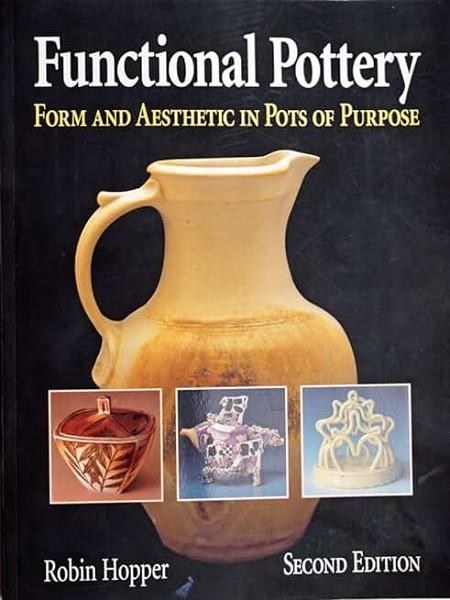
Functional Pottery, 2nd ed., Hopper
Item#: BK135
ISBN: 978-0873418171
Book description:
Functional Pottery, the best-selling pottery reference first published in 1986, has been extensively revised and updated to include more than 250 color photos as well as hundreds of black and white photos and illustrations. Covering historical as well as contemporary pottery, this acclaimed and inspirational book presents both philosophical and practical experiences from the 43-year pottery-making career of Robin Hopper, one of North America's most recognized ceramic artists.
Perusing this book is like having a ceramic museum, art gallery, encyclopedia, and master potter at hand, teaching and inspiring at the same time.
- Beginning with a view of the historical development of pottery, the book presents a wide discussion on the aesthetics of form and design.
- Also addressed are the mechanics of making and the practical solutions to functional design in pots for eating, drinking, storage, pouring, cooking, serving, and pots for rituals and contemplation.
- The recent work and short biographies of 16 internationally recognized ceramic artists are showcased in the Portfolio section.
Insight, information and inspiration
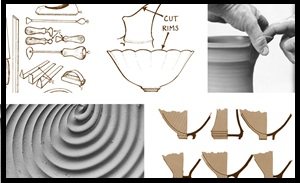
Functional Pottery is divided into four major sections: historical, cultural and ethnic variations; form, growth, and design; practical and analytical approaches for both the student and working potter; and an up close view of sixteen contemporary clay workers. No matter what type of functional work you’re making or planning to make, Functional Pottery, provides insight, information and inspiration you’ll refer to over and over again. Making pottery is a timeless occupation, and the best of pots through the ages have a quality of timelessness about them that transcends chronological and cultural boundaries. Their appeal is universal. The essence of form, the movement of a brush, the quality of surface, the hidden meanings, and the integration with mankind’s daily existence over several thousand years, all add to the significance of the art.
Part One: Made to be Used
Hopper begins with a short exploration of the growth, development, and change in utilitarian or domestic pottery made throughout history in regard to form, function, and detail. Using many photographs and drawings of pots from a variety of cultures, his descriptions will whet your appetite for further exploration online, in museums and in books. The objects chosen are mainly arranged in groups that focus on form and details: spouts, handles, feet, and lids. They come from a wide geographical range, but by no means can be thought of as all-encompassing, but intended to be used as a reference to learn from and draw from to produce new work.
Part Two: Form, Proportion, Relationships — The Measure of All Things
In part two, Hopper analyzes form and proportion, and their relationship to each other and to us. By considering form from organic, geometric, architectural, and human origins, and relating them to producing and developing functional pottery, you’ll find out why and how these relate to making pots. And while you may think that math doesn’t play a role in pottery, you’ll soon discover that the more you look at form, the more you’ll realize how closely allied to mathematics it really is, and it permeates everything that we are and do. Hopper examines this concept with great illustrations that will help you better understand what goes into making well proportioned pots.
Part Three: Mechanics—Analysis, Practice, Considerations
Hopper gets into the nitty gritty of pottery making in Part 3 where he describes pragmatic approaches for creating pottery primarily on the wheel since the wheel is the most efficient and most widely used tool for the production of most styles of handmade pottery. You’ll learn about lids, feet, rims, trimming, handles, tools, spouts, and handles. You’ll also find out what makes a good cup, bowl, or jar just to name a few of the many forms and objects discussed and illustrated.
Part Four: Ways of Working
To better illustrate good pottery, Hopper features sixteen potters making functional vessels in a diverse range of styles. Each person’s work in this portfolio is indicative of a certain genre of ceramic expression within the functional vessel format. By keeping to a small number of individuals, you’ll get a better view of each and their particular solutions to the diverse problems of form and function, and to how they may have developed a personal aesthetic based on greatly varied life experiences.
Conclusion: Standards and Aesthetics
The usual divisions of aesthetic appraisal are: form, proportion, function, surface, color, process, intent, and content, not necessarily in that order. Aesthetics relate not only to matters of form, function, and surface, but also to cerebral, spiritual, and emotional ideas and ideals (intent and content). These are the most difficult to analyze and to understand.
About the Author
Robin Hopper was a potter, author, teacher, consultant and garden designer. He been working in the field of ceramics in 1955. He had numerous one-man exhibitions and was the first recipient of the Bronfman Award, one of Canada’s most prestigious awards. He was the author of The Ceramic Spectrum and Making Marks, and created several DVDs featuring throwing and decorating techniques. Since 1972, he had been a full-time studio artist and, with his wife Judi Dyelle, operated ‘Chosin Pottery Inc., Victoria, B.C., Canada.
Share:
Share on Facebook Share on Twitter Share on Pinterest Tell a friend