
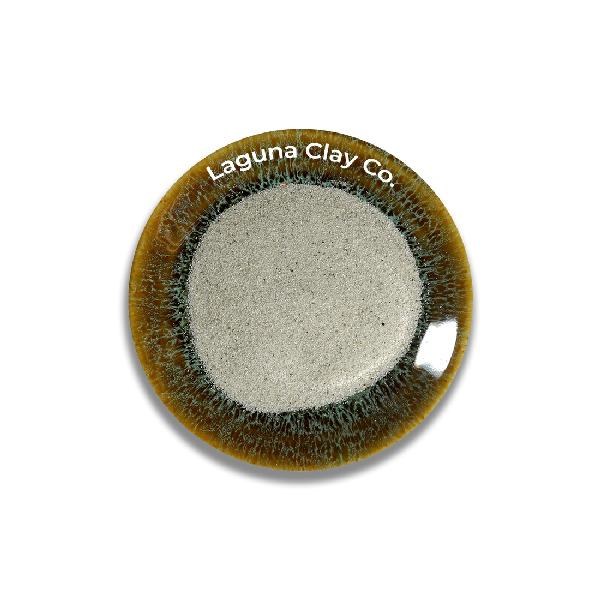
)
)
Sand- 60 Mesh
| Qty: | Unit Price per LB: |
|---|---|
| 5 | $0.46 |
| 10 | $0.41 |
| 100 | $0.31 |
Item#: 217401560
MPN: MSAND60
Alternate Names: quartz sand
- Full bag is 100 lbs
- Feldspathic silica sand replaces grog to add texture and strength.
- Begins to soften at Cone 10.
* (magnetically cleaned for fewer specks).
Often used in clay bodies instead of grog or to augment grog. However, the particle shape should be taken into account. Silica sand particles can be rounded or angular, the latter being more suited to clay bodies. However, the very high thermal expansion of the quartz particles should not be ignored. During temperature changes (like cooling in the kiln), quartz grains act independently in the surrounding brittle matrix, imposing their size changes and weakening the fired item or contributing to dunting.
Silica sand is often used to reduce body firing shrinkage and fired warpage. But it is often better to reduce the flux sourcing material in the body (usually feldspar) instead.
Many grades of natural silica sand have round particles, making them excellent as a lubricant on kiln shelves to enable ware to move while shrinking and prevent it from sticking. Silica sand is also used as a source of SiO2 in the glass industry.
Many sizes and particle shapes of silica sand are available. Colors can range from white to brownish, the latter containing iron. Small amounts of iron or contaminating products can darken the sand considerably. Many industrial silica sands are not suitable for ceramics because of the level of impurity particles they contain.
Fused silica or fused quartz is not the same as silica sand. Silica sand particles are crystalline. Fused silica sand is made by melting quartz and cooling it rapidly, the particles are a glass instead of a crystal.
Share:
Share on Facebook Share on Twitter Share on Pinterest Tell a friend