
)
)
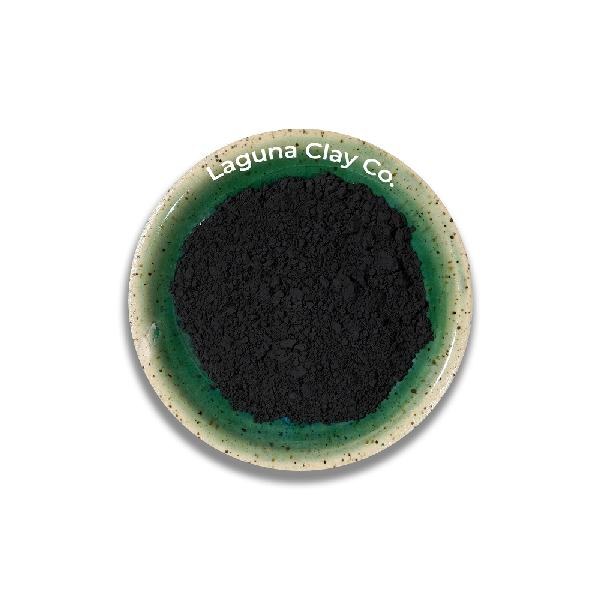
Nickle Oxide- Black (Sold in .25 lb Units)
| Qty: | Unit Price per LB: |
|---|---|
| 1 | $82.73 |
| 5 | $55.15 |
| 10 | $50.55 |
| 50 | $45.96 |
Item#: 275701
MPN: MNIOX
Alternate Names: Ni2O3, Nickelic Oxide, Nickel sesquioxide, Nickel (III) oxide, Nickel Oxide
- Full Bag is 50 lbs.
- Produces browns, blues, grays and yellows in glazes.
- Can also tone down more intense colorants such as cobalt and copper.
* Maximum use is usually 3%.
- It is more concentrated than nickel carbonate and as little as .02% gives a noticeable tint. Normal additions are 2-5%.
A powerful and refractory colorant that produces greys, blues, and yellows. It is more concentrated than nickel carbonate and as little as .02% gives a noticeable tint. Normal additions are 2-5%.
Typical grades are 75-77% nickel metal with trace elements (0.0001-0.01%) of cobalt, iron, copper, zinc, manganese, magnesium, calcium, sodium and sulfur and chloride volatiles. Particle sizes can be very fine, down to 5 microns (below 325 mesh). It is insoluble in water and soluble in acids
It can also soften and mute more intense colorants such as copper and cobalt.
It is refractory and can raise the melting temperature of glazes if used in large amounts.
Given its high surface area and chemical reactivity, high purity black nickel oxide can be used to react with acids to form nickel salts, which can then be converted into other nickel compounds. Examples include the production of nickel sulfamate for electroplating, or the production of nickel molybdate for hydrodesulfurization catalysts.
The oxide combines with other metal oxides to produce special color pigments. Uses also include glass frits for porcelain enamel and to develop colors in clear glass.
Share:
Share on Facebook Share on Twitter Share on Pinterest Tell a friend